
Sewer Camera Inspection
(602) 858-7303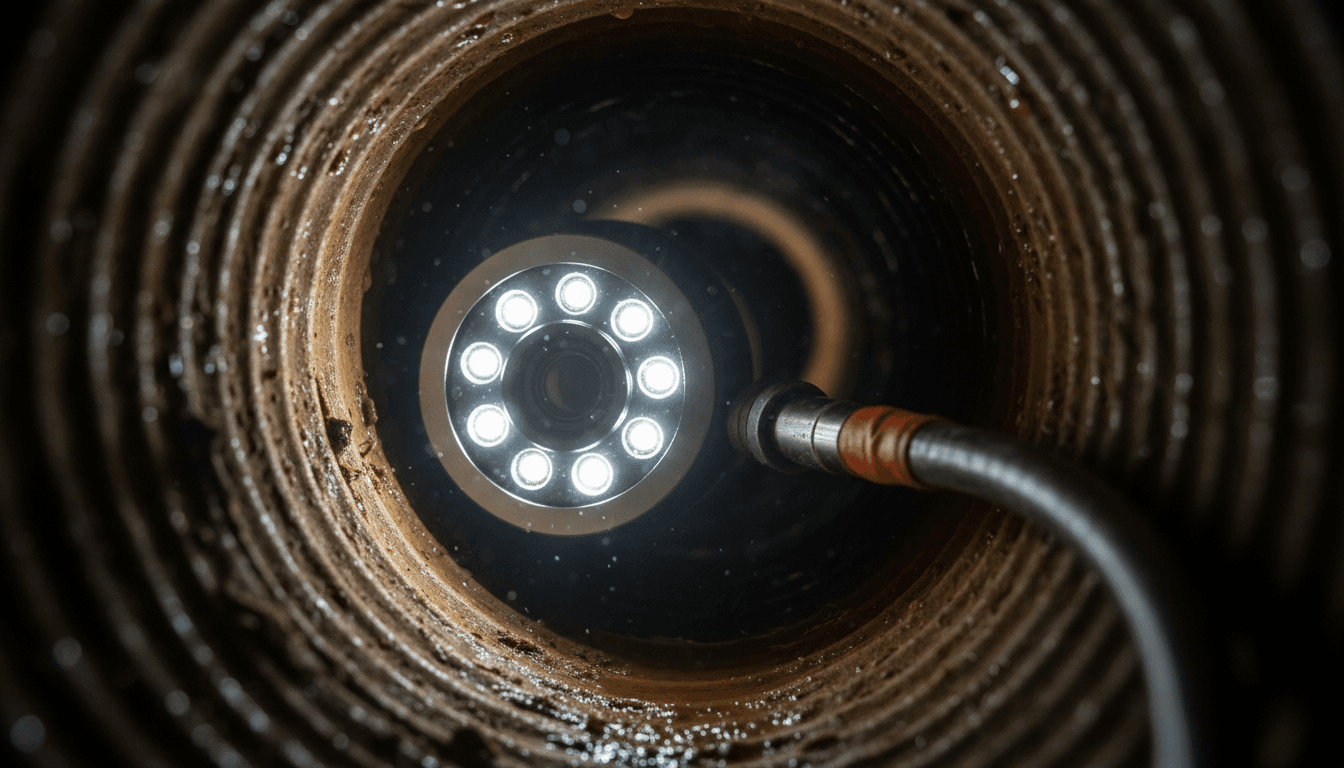
Before we cut into anything, open any wall, or quote you on a repair, we want to see what's happening inside the pipe. That's why we push an HD camera through your sewer line — so we can give you an honest diagnosis based on what's actually there, not what we think might be there. Call (602) 858-7303 to schedule a sewer camera inspection.
What a Sewer Camera Inspection Reveals
Our waterproof HD camera is mounted on a flexible rod that feeds through your sewer line from the cleanout. As it travels through the pipe, we watch a live feed on a high-definition monitor — and so do you, if you want. We record the entire inspection so you have documentation.
The camera shows us the interior condition of the pipe wall, the joints between pipe sections, and anything obstructing the flow path. Here's what we typically find in Phoenix sewer lines:
Root intrusion. This is the most common finding in Phoenix neighborhoods with mature landscaping. Mesquite trees are the worst offenders — their root systems are massive and aggressive, and they seek out the moisture in sewer line joints. Palo verde and ficus are close behind. In areas like Arcadia, where lots have multiple mature trees and the sewer pipes are original 1950s and 1960s clay, root intrusion is almost a certainty. The camera shows exactly where roots have entered and how severely they've impacted the pipe.
Mineral scale buildup. Phoenix's hard water doesn't just clog showerheads. Inside your drain pipes, calcium carbonate builds up on the pipe walls over decades. The camera shows this as a rough, narrowed pipe interior — sometimes reducing a 4-inch pipe to a 2-inch effective opening. This is especially common in homes in north Scottsdale, Paradise Valley, and Fountain Hills where the water hardness is even higher than central Phoenix.
Cracked, offset, or collapsed pipe. Clay sewer pipes (standard in Phoenix homes built before 1975-1980) are rigid and brittle. Desert soil expansion and contraction, settling, and root pressure cause cracks and joint separations over time. The camera shows the exact location and severity — a hairline crack is very different from a collapsed section, and the repair approach is different too.
Bellied pipe. A "belly" is a section of pipe that has sunk below the rest of the line, creating a low spot where water pools and waste collects. Bellies are common in Phoenix because our desert soil is prone to settling, especially in areas where homes were built on fill dirt or near former agricultural land (much of Gilbert, Chandler, and parts of Mesa). The camera shows the belly and we can measure its depth with a self-leveling feature.
Grease buildup. Especially in the first 15 to 25 feet from the kitchen drain to the main line, grease coats the pipe walls and hardens. Over time it narrows the pipe just like mineral scale does. The camera confirms whether a recurring kitchen drain clog is a grease problem in the branch line, a root problem in the main line, or both.
The Equipment We Use
We run RIDGID and Spartan camera systems — the same brands used by municipal sewer departments. Our push cameras handle lines from 2 inches (bathroom branch lines) up to 8 inches (main sewer laterals). The camera head includes a powerful LED array that illuminates the pipe interior, and a 512 Hz sonde transmitter that lets us locate the camera position from the surface with a locator wand. That means we can mark exactly where a problem is — to the foot — without guessing.
For longer runs, we use cameras with up to 200 feet of push rod, which is enough to inspect from the house cleanout all the way to the city sewer connection on most Phoenix residential lots.
When You Should Get a Camera Inspection
Not every drain call needs a camera. A one-time kitchen sink clog from potato peels? Just clear it and move on. But there are situations where a camera inspection saves you real money and headaches:
Recurring clogs. If the same drain clogs more than twice in a year, there's a reason — and the camera will find it. Repeating the same clearing without looking inside the pipe is like taking aspirin for a headache that turns out to be a cracked tooth.
Buying an older home. Any Phoenix home built before 1985 should get a sewer camera inspection as part of the purchase process. General home inspectors don't scope the sewer line. We've saved buyers tens of thousands of dollars by catching collapsed pipes and massive root intrusion before closing.
Multiple slow drains. If your toilets, showers, and sinks are all draining slowly, the problem is downstream — in the main sewer line. The camera tells us whether it's roots, a belly, a collapsed section, or just heavy buildup that needs jetting.
After a main line cleaning. We always recommend a camera inspection after cleaning a main sewer line, because the camera confirms the line is fully clear and identifies any structural issues that caused the problem in the first place.
Ready to see what's actually happening in your pipes? Call (602) 858-7303.
Sewer Camera Inspection: frequently asked questions
Need sewer camera inspection in Phoenix? Call now.
(602) 858-7303