
Floor Drain Cleaning
(602) 858-7303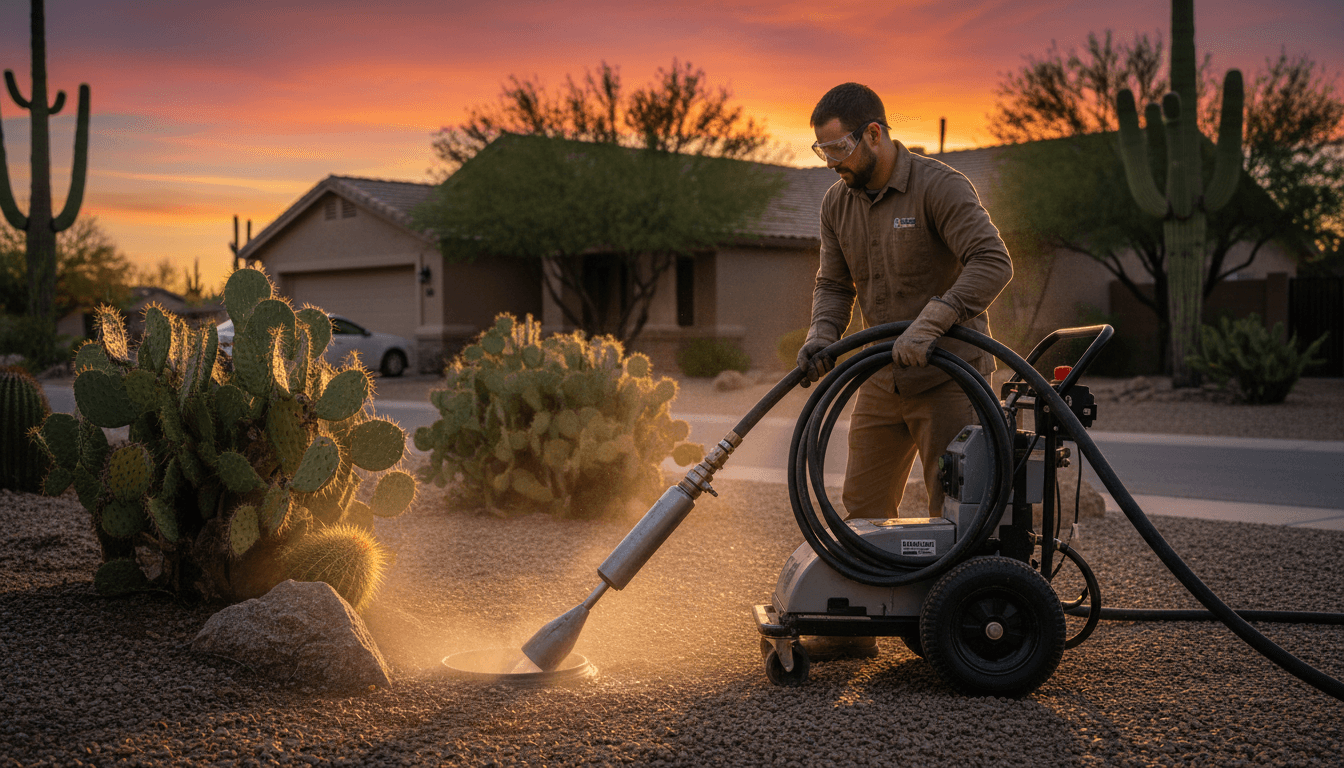
Floor drains are the drains nobody thinks about — until they back up and put an inch of water across the garage floor, flood the laundry room, or turn a pool deck into a swamp. They sit flush with the concrete, quietly doing their job for years, and then one day they don't. If you've got a floor drain that's slow, backing up, or producing a sewer smell, call (602) 858-7303 and we'll get it cleared.
Where floor drains live in Phoenix homes
Most Phoenix homes have at least two or three floor drains, and many homeowners don't even realize they're there. The most common locations are the garage (usually near the front or center, recessed into the slab), the laundry room (next to the washing machine to catch overflow and condensate), and near the water heater (to handle leaks or pressure relief valve discharge). Homes with pools — and in Phoenix, that's roughly half of all single-family homes — typically have additional drains around the pool deck to manage splash-out and deck washdown water.
Older homes in neighborhoods like Willo, Encanto, Coronado, and the historic districts near downtown Phoenix sometimes have utility room floor drains tied to the home's original plumbing from the 1920s through the 1950s. These drains often connect to clay or cast-iron branch lines that are prone to the same root intrusion and mineral buildup problems that affect main sewer lines in those areas.
Commercial buildings across the Phoenix metro — warehouses along the I-17 corridor, restaurants on Camelback Road, auto shops in south Phoenix and Mesa — rely heavily on floor drains. A clogged commercial floor drain can shut down operations fast, which is why we prioritize those calls.
Why floor drains clog in the Phoenix area
Floor drains catch everything that ends up on the floor — and in Phoenix, that means dirt, sand, dust, leaves, and debris blown in during monsoon storms. The Valley's monsoon season runs from July through September, and those sudden downpours push water, mud, and landscape debris toward garages and covered patios. If the floor drain line is already partially narrowed by mineral deposits from our hard water (15 to 20 grains per gallon, among the hardest in the country), that surge of storm runoff overwhelms it.
Garage floor drains see motor oil drips, antifreeze, paint residue, and construction dust — all of which settle in the trap and branch line. Laundry room drains accumulate lint, detergent residue, and the calcium buildup that Phoenix's hard water deposits in every pipe it touches. Pool deck drains collect sunscreen, body oils, hair, and the calcium scale that forms when pool water evaporates on hot concrete — a daily occurrence when surface temperatures exceed 150 degrees in July and August.
The other big problem with floor drains is the P-trap drying out. Every floor drain has a water seal in the trap that blocks sewer gas from entering your home. In Phoenix's extreme heat, that trap water evaporates quickly — especially in garages where summer temperatures routinely hit 130 to 140 degrees. Once the water's gone, you get a sulfur or rotten-egg smell coming up through the drain. This is a common summer complaint from homeowners across the Valley, from Ahwatukee to Cave Creek.
How we clean floor drains
We start by pulling the drain cover and inspecting the trap. In many cases, especially with garage and laundry drains, the blockage is right there in the first two feet — accumulated dirt, lint, or mineral crust sitting in the trap. We clear that by hand or with a small cable, then test flow by running water.
If the clog is deeper in the branch line, we feed a 3/8-inch or 1/2-inch cable through the drain into the branch line that connects to the main sewer. These branch lines typically run 10 to 30 feet before hitting the main, and they can accumulate the same grease, mineral, and root problems as any other drain line in the house. For stubborn blockages or heavy mineral buildup, we bring in the hydro jetter at 1,500 to 2,500 PSI to strip the pipe walls clean.
For commercial floor drains — restaurant kitchens, breweries, auto bays, warehouse floors — we use larger cable machines and higher-pressure jetting. Commercial floor drain lines are often 3-inch or 4-inch pipe carrying heavier waste loads, and they need more aggressive cleaning. We also camera-inspect commercial floor drain lines after cleaning to document the pipe condition for your maintenance records.
Pool deck and outdoor drain cleaning
Phoenix pool deck drains are a category of their own. The combination of pool chemicals, calcium-heavy splash water, sunscreen, body oils, and organic debris from palo verde seed pods creates a sticky, calcite-crusted mess inside the drain line. We see this constantly in Scottsdale, Paradise Valley, Arcadia, and the northeast Valley neighborhoods where nearly every home has a pool.
We clean pool deck drains with a medium-duty cable followed by a low-pressure flush. If the drain connects to the home's sewer system (as opposed to a separate landscape drainage system), we verify the connection point and make sure the main line isn't affected. If the drain runs to a dry well or landscape drain, we check that the well is functioning and not silted in — a common problem after years of monsoon seasons deposit layer after layer of desert soil.
Keeping floor drains working year-round
A few simple habits prevent most floor drain problems. Pour a gallon of water down each floor drain every two to three weeks during summer to keep the P-trap seal intact and block sewer gas. Keep the drain cover in place and clear debris away from it regularly. After monsoon storms, check garage and patio drains for mud or debris buildup. And schedule a professional cleaning every 12 to 18 months — especially if you have older pipes, pool deck drains, or heavy tree cover near the branch lines.
Floor drain backing up? Sewer smell in the garage? Call (602) 858-7303 and we'll take care of it.
Floor Drain Cleaning: frequently asked questions
Need floor drain cleaning in Phoenix? Call now.
(602) 858-7303